7 Best Automated Savings Methods for Investors
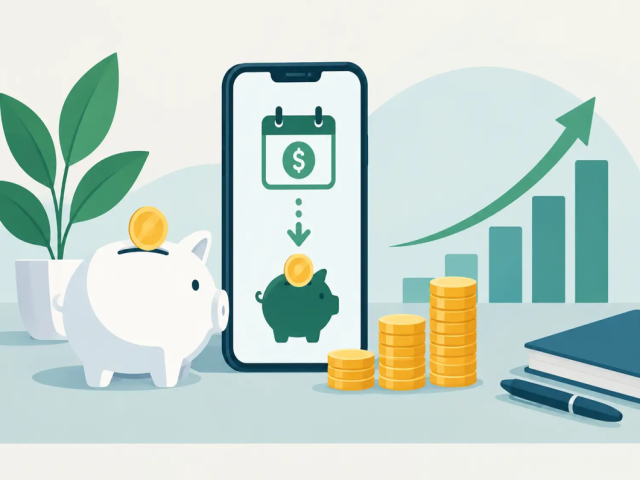
Learn the best automated savings methods to build an emergency fund, invest consistently, and direct more of every paycheck toward your goals each year.
Your savings plan should not depend on remembering to move money after a long workday. The best automated savings methods make progress happen in the background, turning each paycheck, purchase, or income increase into a planned move toward stronger financial well-being.
For busy professionals, new investors, and business owners, automation removes one of the biggest barriers to building wealth: inconsistency. It creates a system that protects your priorities before day-to-day spending absorbs the available cash. The right method depends on whether you are building a safety reserve, preparing for a major purchase, or creating long-term market exposure.
Why automated saving creates real momentum
Manual saving sounds simple, but it often competes with immediate expenses, unexpected bills, and the temptation to wait for a “better month.” Automation reverses that pattern. Rather than saving whatever remains, you decide in advance what portion of your income belongs to your future.
This approach also gives you a clearer view of your real spending capacity. Once a transfer is scheduled, the amount left in your everyday account becomes the amount available to spend. That structure can reduce financial stress because your emergency fund, investment contribution, or specific savings goal continues receiving attention without requiring repeated decisions.
Automation is not a substitute for a budget. If your account balance is too tight, an aggressive transfer can lead to overdrafts or credit card reliance. Start at a comfortable level, review it regularly, and increase it as your cash flow improves.
1. Split your direct deposit before you can spend it
A split direct deposit is one of the most effective ways to save because the money never sits in your primary spending account. Many employers let you send either a fixed dollar amount or a percentage of every paycheck into a separate savings account.
For example, you might direct 10% of your net pay to a high-yield savings account and the rest to checking. If your income varies, a percentage can keep the plan proportional. If your income is stable and your monthly bills are precise, a fixed amount may provide more control.
This method works especially well for emergency savings. Keep that reserve accessible and separate from money intended for travel, a down payment, or investing. When the purpose is visible, you are less likely to borrow from it for ordinary purchases.
2. Schedule transfers for payday
If direct deposit splitting is not available, set up an automatic transfer for the day after your paycheck arrives. The timing matters. A transfer scheduled at the end of the month may fail because other spending has already taken priority.
Choose a dedicated account and name it according to its purpose, such as “Emergency Reserve” or “Home Fund.” Naming accounts is a small operational detail, but it gives every transfer a job. It also lets you track progress without mixing short-term savings with long-term capital.
Begin with an amount that will run consistently. Saving $50 every payday for a full year is more valuable than setting up $400 transfers that you repeatedly cancel. Once the habit is stable, raise the amount in small steps.
3. Use round-ups as a supporting method
Round-up programs move the spare change from qualifying purchases into savings or investments. A $4.35 purchase may trigger a $0.65 transfer, for example. On its own, this is unlikely to fund a major goal quickly, but it can build a useful base without changing your daily routine.
Round-ups are best used as a supplement to a scheduled transfer, not as your entire strategy. Their main advantage is behavioral: they turn everyday spending into a reminder that small actions can create measurable progress over time.
Review the rules before relying on any program. Some round up to the nearest dollar, while others allow multipliers that can increase contributions. A multiplier may be helpful when cash flow is strong, but it can become inconvenient if your account runs close to its minimum balance.
4. Create separate automated goal accounts
One general savings account can become confusing when it holds money for several goals. Instead, create separate buckets for your emergency fund, annual insurance costs, holiday spending, a future purchase, and other priorities. Then automate a transfer to each bucket.
This method turns vague intentions into visible targets. If your car maintenance fund needs $1,200 per year, a monthly transfer of $100 makes the goal understandable and manageable. If a short-term goal has a fixed deadline, divide the amount needed by the number of paychecks remaining and automate that figure.
Keep the order of priorities clear. An emergency reserve generally comes before optional goals because it protects the rest of your plan when life becomes expensive. After that, use separate accounts to prevent a major planned expense from disrupting your investment contributions.
5. Automate increases after raises and windfalls
A raise can disappear quickly when lifestyle costs expand at the same pace as income. A better move is to automate part of every increase before you adjust your spending. If your take-home pay rises by $300 a month, you might send $100 or $150 directly to savings or investments.
The same principle applies to tax refunds, commissions, bonuses, and freelance income. You do not need to save every extra dollar, but assigning a set percentage in advance prevents windfalls from becoming invisible spending.
This is one of the best automated savings methods for people who already have a basic plan but want their wealth-building rate to improve naturally over time. Your system grows as your earning power grows, without forcing a dramatic change to your lifestyle.
6. Automate debt payments and savings together
High-interest debt can weaken any saving strategy because interest charges consume money that could otherwise support your goals. Still, stopping all saving while paying debt can leave you exposed to the next unexpected expense. The answer is usually balance.
Automate the minimum required payment plus an additional amount toward high-interest balances, while continuing a smaller transfer into emergency savings. Once expensive debt is under control, redirect the freed-up payment amount toward your reserve, retirement plan, or investment account.
This creates a powerful financial sequence: reduce costly obligations, protect yourself from new debt, then increase the capital working toward future returns. The exact split depends on your interest rates, job stability, household needs, and access to credit.
7. Automate long-term investment contributions
Savings protects money needed soon. Investing is designed for money that can remain committed through market movement and longer time horizons. Mixing these roles can create problems, especially if you invest money you may need for an emergency in a few months.
Once your cash reserve and near-term obligations are covered, recurring investment contributions can help you participate consistently instead of trying to predict the perfect market entry point. This approach can be applied to retirement accounts, diversified funds, or professionally managed strategies aligned with your risk tolerance and objectives.
For investors seeking managed market exposure without handling daily trading decisions, a service such as Budrigantrade may fit into the investment portion of a broader automated plan. Managed investing still involves market risk, and returns are never guaranteed. Review the investment horizon, withdrawal terms, fees, asset exposure, and level of risk before committing capital.
Build an automation schedule that you can keep
The strongest system is usually simple. Start with one transfer on payday, then add goal-based accounts or recurring investments as your income and confidence grow. Monitor the plan monthly at first, especially if your pay varies or your expenses change frequently.
A practical order is to fund essential bills, maintain a cash buffer, contribute to an emergency reserve, reduce high-interest debt, and then direct long-term capital toward investments. You can adjust the percentages, but the sequence helps prevent short-term needs from interrupting your long-term progress.
Set calendar reminders twice a year to review your transfer amounts. Increase them after raises, reduce them temporarily during major transitions, and make sure every account still serves a meaningful goal. Financial automation works best when it stays connected to your real life.
The most useful next step is not finding a perfect amount. It is choosing one transfer you can activate before your next paycheck, then allowing consistency to do the work that motivation rarely sustains.
Recent Posts
-

-

-

-
What Causes Market Volatility? Key Drivers
10 Nov 2026
-

Small Business Treasury Allocation That Works
09 Nov 2026
-

Best Practices for Investor Cybersecurity
09 Nov 2026
-
What Causes Investment Losses? 7 Key Reasons
09 Nov 2026
-
Investment Risk Comparison for Smarter Choices
09 Nov 2026
-

ETFs Versus Mutual Funds for Investment Goals
09 Nov 2026
-
-

Digital Wealth Management Trends to Watch
01 Nov 2026
-

Is Crypto Transaction Security Important?
01 Nov 2026
-
9 Best Financial Forecasting Tools for Investors
01 Nov 2026
-

Actively Managed Versus Robo Advisors Compared
01 Nov 2026
-