Commodity Portfolio Allocation for Modern Investors
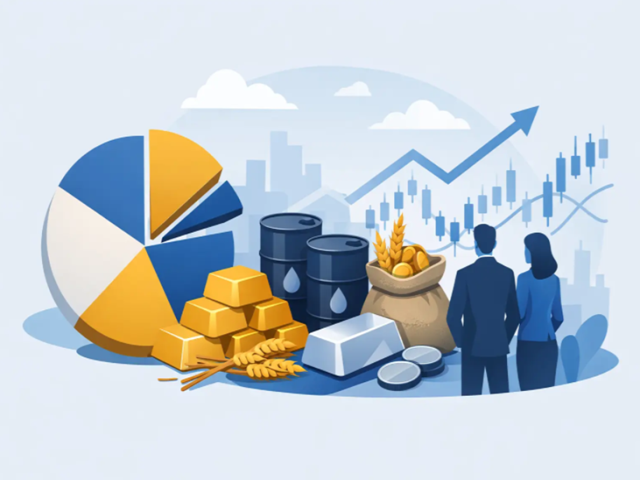
Learn how commodity portfolio allocation can diversify exposure, manage inflation risk, and support long-term investment goals with more clarity.
A portfolio made entirely of stocks, bonds, or cash can look comfortable until a shift in inflation, supply chains, interest rates, or currency values changes the market’s direction. Commodity portfolio allocation gives investors another source of exposure: the real-world materials that power global commerce, from energy and metals to agriculture.
For investors pursuing financial well-being and passive income, the goal is not to chase every move in oil, gold, wheat, or copper. It is to decide whether commodities deserve a measured place in a broader investment strategy, and how that position can work alongside equities, currencies, crypto assets, and indices. A thoughtful allocation can add diversification, but it still carries meaningful risk and requires a clear plan.
What Commodity Exposure Brings to a Portfolio
Commodities are physical goods with prices shaped by production, consumption, weather, geopolitics, inventory levels, transportation constraints, and economic growth. That makes them behave differently from company shares or government debt. When an energy shortage pushes fuel prices higher, for example, oil-related commodity exposure may respond in ways that technology stocks do not.
This difference is the main reason investors consider commodities. A portfolio with several asset classes is less dependent on one market environment. Stocks may perform well during periods of expanding corporate earnings. Bonds can play a stabilizing role when growth slows. Commodities may become more relevant when inflation rises, supply is constrained, or the dollar moves sharply.
That does not mean commodities always rise when inflation rises, or that they will protect a portfolio in every downturn. Gold, industrial metals, natural gas, and agricultural products each have their own drivers. Commodity markets can move quickly and can be affected by events that are difficult to predict. Diversification is a risk-management principle, not a promise of profit.
Commodity Portfolio Allocation Starts With Your Goal
The right allocation depends on why you are investing, when you expect to use the money, and how much volatility you can realistically tolerate. An investor building long-term wealth may view commodities as a modest diversifier. Someone focused on short-term cash flow may need to be more careful, since commodity prices can swing sharply over days or weeks.
Start with the role the allocation is expected to play. If the objective is to reduce concentration in stocks, a broad commodity basket may make more sense than a single bet on gold or crude oil. If the concern is persistent inflation, an investor may want exposure that is connected to energy, metals, and agriculture rather than relying on one commodity alone.
Time horizon matters just as much. Investors with a long horizon may be able to withstand periods when commodity prices fall or remain flat. Investors who need funds for a major purchase, business expense, or near-term obligation should avoid treating volatile commodity exposure as a cash substitute.
A managed investment approach can help keep these choices connected to a larger plan. Instead of monitoring price charts around the clock, investors can focus on their targets while market professionals evaluate changing conditions, position sizing, and portfolio balance.
How Much Should Be Allocated?
There is no universal percentage for commodities. A small allocation may be appropriate for an investor who already holds a diversified mix of global assets. A larger allocation may fit an investor with a specific view on inflation or supply-driven markets, but it also increases the effect of commodity volatility on total results.
Many investors think in ranges rather than fixed promises. A conservative approach may use a limited allocation designed to broaden exposure without dominating the portfolio. A more growth-oriented investor may accept a higher range, particularly if other holdings are concentrated in assets that tend to react poorly to inflation or currency weakness.
The key is to avoid allocating based solely on recent headlines. When commodities have rallied for months, it can feel tempting to increase exposure at the most expensive point. When prices fall, it can feel equally tempting to exit at the worst moment. A disciplined allocation process sets a target range in advance and revisits it when the portfolio drifts materially away from that range.
For example, if a commodity position rises significantly while other assets lag, it may become larger than intended. Rebalancing can bring the portfolio closer to its original risk profile. If the position falls, rebalancing may mean adding only when the investor’s thesis, financial capacity, and time horizon still support it.
Choose Broad Exposure Over a Single Headline Trade
Commodity investing is often associated with dramatic predictions about gold, oil, or other high-profile markets. But a single commodity can expose an investor to a narrow set of risks. Oil can be affected by production policy and regional conflict. Agricultural commodities can react to weather patterns. Industrial metals can move with manufacturing demand and global construction activity.
Broader exposure can spread risk across several commodity groups. Energy may respond to fuel demand and supply disruptions. Precious metals can be influenced by interest rates, currency trends, and market uncertainty. Industrial metals are connected to infrastructure and economic activity. Agriculture reflects food demand, harvest conditions, and transportation costs.
Even broad exposure needs monitoring. Commodity-linked products may use futures contracts, which can introduce additional factors such as contract roll costs and differences between spot prices and investment returns. This is one reason market access alone is not enough. Investors benefit from understanding what they own and from having clear visibility into performance, allocation, and transaction activity.
The Trade-Off: Diversification Can Add Volatility
Commodities can bring balance to a portfolio, but they are not automatically low risk. Prices may fall during global slowdowns, demand shocks, policy changes, or periods of rising interest rates. Certain markets can also become highly volatile with little warning.
Investors should be cautious about viewing commodities as a guaranteed inflation hedge or a replacement for an emergency reserve. Cash set aside for immediate needs should remain accessible and stable. Likewise, an allocation intended for long-term diversification should not be funded with money needed to cover debt payments, essential expenses, or short-term commitments.
The strongest approach is usually one that combines opportunity with guardrails. Set a target allocation. Know the reason for holding it. Maintain exposure across other asset classes. Review performance in the context of the full portfolio rather than reacting to one week of price action.
A Managed Way to Access Global Commodity Markets
For many investors, the challenge is not recognizing the potential value of commodities. It is finding the time and confidence to monitor global economic data, supply conditions, technical signals, and market news consistently. Commodity markets operate across regions and react quickly to information, making hands-on management demanding.
Budrigantrade is built for investors who want access to professionally managed market exposure without personally executing every trading decision. Through a transparent online experience, clients can follow their portfolio activity while analysts monitor global markets and manage positions in line with the selected investment approach.
That convenience does not remove risk, and no investment program should be viewed as guaranteed. It does give investors a more practical way to participate in markets that may otherwise feel complex or inaccessible. The right solution is one that matches your objectives, risk comfort, funding timeline, and need for portfolio visibility.
Keep the Allocation Connected to Your Bigger Plan
Commodity exposure works best when it has a job to do. It may help reduce overreliance on one asset class, add participation in global supply-and-demand trends, or support a long-term plan designed to address inflation uncertainty. It should not become a reaction to fear, hype, or a single price forecast.
Before adding commodities, consider how the position fits your broader financial goals and how you would respond if its value declined. A clear allocation plan, regular review, and measured expectations can turn a volatile market category into a more intentional part of a diversified investment strategy. The most useful portfolio is not the one that follows every headline. It is the one designed to keep working toward your goals when headlines change.
Recent Posts
-

24 Hour Market Monitoring Benefits Investors
10 Aug 2026
-

The Future of Managed Trading Platforms Online
10 Aug 2026
-

Crypto Investment Dashboard Review Checklist
10 Aug 2026
-

A Clear Guide to Managed Trading Accounts
10 Aug 2026
-
Profit Commission Investing Review: How It Works
08 Aug 2026
-
How to Choose Investment Duration for Your Goals
08 Aug 2026
-

How Analyst Monitored Portfolios Build Strategy
08 Aug 2026
-

Retail Trust Management Guide for Investors
08 Aug 2026
-

When Should Investors Choose Longer Horizons?
08 Aug 2026
-

Best Portfolio Visibility Features for Investors
04 Aug 2026
-
-

-

Fundamental and Technical Analysis Service
04 Aug 2026
-

-